
The Agentic Web Summer
OpenAI and Anthropic are putting browsers inside their agents. For commerce, that makes the website itself part of the agent stack.

TL;DR
OpenAI is shutting down Atlas, but it is not walking away from the browser. The same capability is moving inside ChatGPT and Codex, and Anthropic went the same way in the same week with a built-in browser inside Claude Code on desktop.
Both companies seem to have reached the same conclusion. Most of the web was built for humans and will not be rebuilt for agents anytime soon, so an assistant that wants to do general-purpose work, for consumers or for enterprises, needs the tool humans use to reach all of it. And because we are visual animals, it needs to work where we can watch, since seeing the agent act is what underwrites the trust.
For site owners, the implication is that agents will increasingly reach your business through the same website humans use, and the open question is whether they find real actions when they arrive and whether you can see any of it.
Watching an agent shop for hotels
We gave ChatGPT’s new in-app browser a normal consumer task: find a well-rated central hotel in New York for two people, October 12 to 15, and keep the page open so we could follow along.
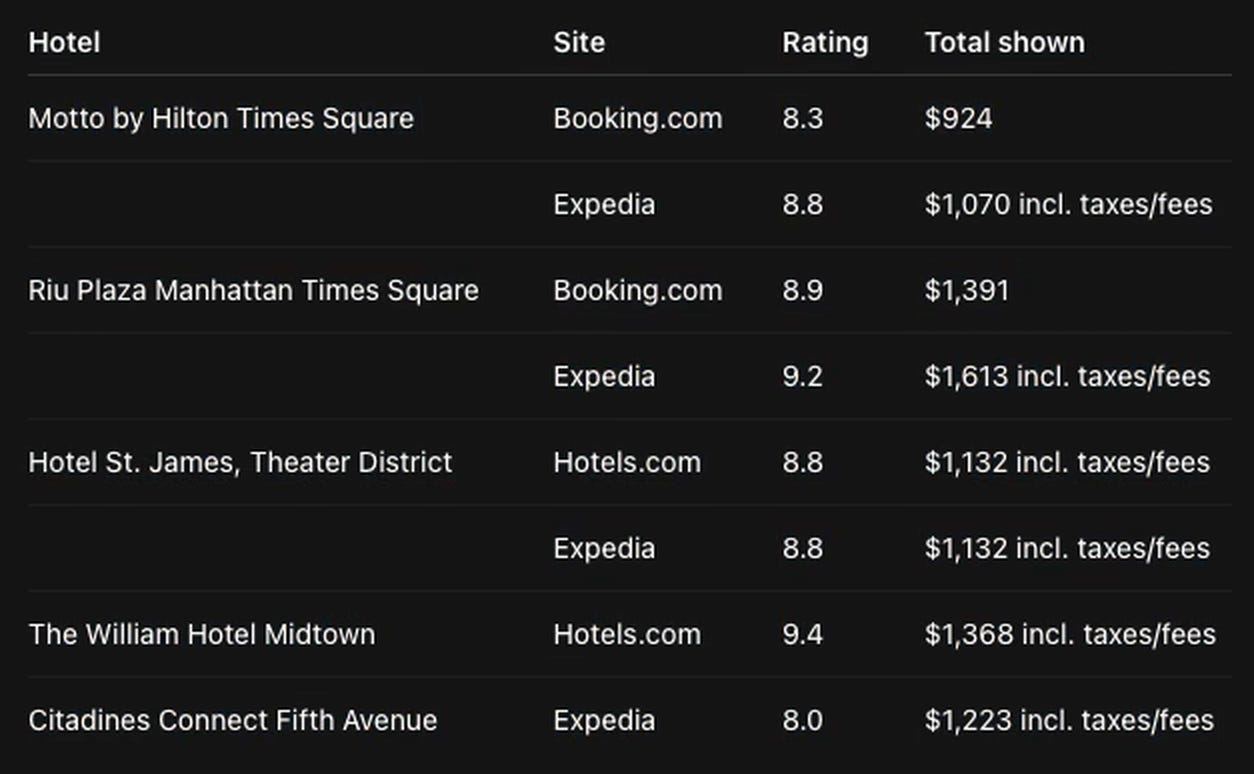
It opened Booking.com next to the chat and ran the search. When we asked it to open Hotels.com and Expedia in two more tabs and repeat the search there, it came back a few minutes later with a single table comparing the same hotels across all three sites, ratings and total prices included.
Watching it work, two things stood out:
Lots of friction - Booking.com’s destination field autocompleted to “New York State Zoo” before the agent noticed and corrected itself, Hotels.com interrupted with a popup about taxes and fees, and the full three-site comparison took almost five minutes, because an interface built for humans is an obstacle course that an agent has to click through step by step.
Trust issues - The agent did not fully trust the pages. Its recommendation came with a warning that Booking’s search-card price may exclude taxes and property charges while Hotels.com and Expedia include them, so the final total should be checked at checkout. The same room showed $924 on one site and $1,070 on another, and the agent caught it, which means price displays are now being read, compared, and second-guessed by software that reports its conclusions back to the customer..
Every agent is getting a browser
While we were running that test, Anthropic shipped the same idea inside Claude Code on desktop: a built-in browser that opens websites next to the agent’s work, where Claude can read pages, click, fill forms, sign in to sites, and ask for permission the first time it acts somewhere new.
Within one week, OpenAI folded a browser into ChatGPT and Codex while shutting down its standalone one, and Anthropic built a browser into its coding agent.
OpenAI is the clearest case of what is actually going on here, because shutting down Atlas was not a retreat from the browser but a recognition that the browser was never the product: the assistant is, and the browser is simply how the assistant reaches the web.
Becoming that assistant, for consumers and for enterprises, means handling the whole web rather than only the services that built an MCP server or a plugin, and since most of the web was built for humans and is not getting rebuilt anytime soon, the only tool that reaches all of it is the one humans already use.
There is also a human reason the browser sits inside the app, visible, instead of headless. Humans are still in the loop, and we are visual animals who like to see the thing happen.
What this means for commerce
Once every agent has a browser, agents stop waiting for integrations. A merchant can enter an agent journey without publishing an app or winning distribution in a plugin directory, because the agent simply visits the website like any other visitor. Our hotel search shows what that looks like today: it works, but slowly and fragilely, with the agent muscling through an interface that was never meant for it.
It also shows where this goes next. WebMCP is the cleaner path, where the site tells the agent directly what it can do, things like search, filter, check availability, or add to cart, instead of making it guess at an interface designed for people. The spec is early, a W3C draft still behind browser flags, but once every agent ships with a browser, it becomes the obvious next step. If you're curious what this already looks like in practice, explore the growing directory of WebMCP sites at WebMCP.com.
The remaining question is visibility. The decision about which hotel wins at what price happened in the chat rather than on any of the three sites, and if agents are going to reach your business through the ordinary website, you will want to know what they looked for, what they compared, and where the journey failed.
That is probably the question site teams should ask this summer.
Bottom line
Atlas is going away, but the agentic browser is not. It is moving inside ChatGPT, Codex, Claude Code, and the other places where agents already work, which means agents will increasingly reach your business through the same website humans use.